
FAQs
- It enables us to access the river to conduct important surveys
- It will allow access to river for construction works to naturalise the river
- It enables more light to get to the river, which will help support a wide range of important aquatic species
Why have some existing trees and scrub been cut down and removed?
The vegetation in the current river channel has been heavily undermanaged over the years. We have been removing a select amount of semi-mature trees, thinning some overgrowth and areas of scrub because:
We have been targeting poor quality/dying trees, over-protruding limbs of some trees that may be dangerous to the public, and quickly regenerating trees such as willow for removal. The majority of trees have been retained, as well as some area of scrub to allow as little habitat disturbance as possible.
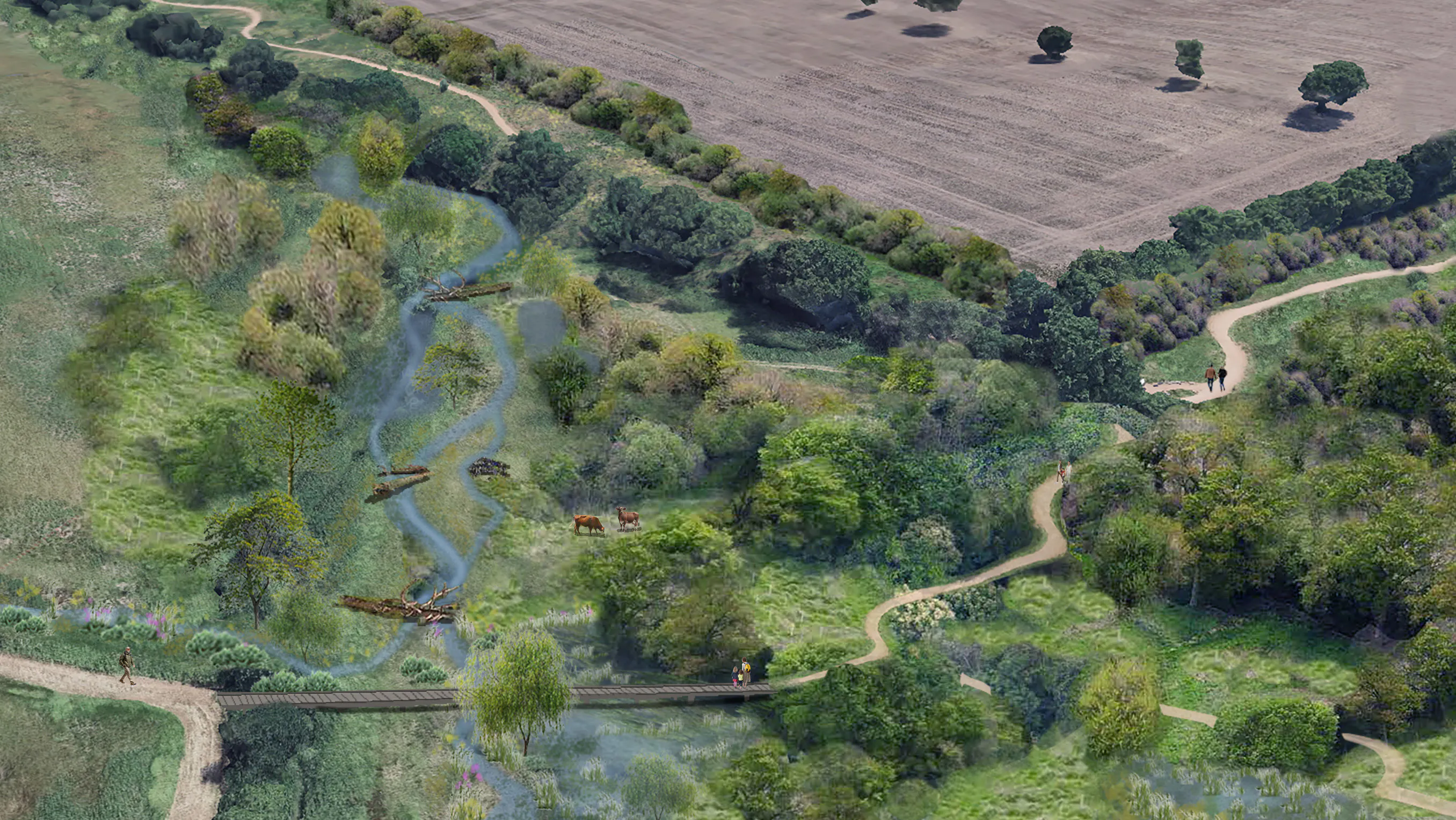
The logs and branches will be used to create woody log-jams to aid the river restoration, and to create deadwood habitat piles and roosting perches in the newly planted woodland.
Will the proposals impact the newly planted woodlands?
The newly planted woodland areas that our volunteers worked very hard to create were designed with the river restoration in mind. The trees planted near the floodplain have more water compatible woodland species, which is compliments the vision for the river naturalisation.
How does this project improve flood risk?
Because the Salmons Brook river has been straightened and deepened over the years, it is disconnected from its floodplain. This means that the river can send flood water downstream quickly, affecting flood risk for thousands of properties in Edmonton. Restoring the river to a natural state allows the floodplain to be activated, and natural features such as meanders and woody log-jams help slow the flow of water.
How can I get involved in the project?
Thames21 will be leading on opportunities to support and monitor the success of the project.
Join their citizen science programme which includes riverfly, physical habitat, water quality, eDNA, and soil monitoring opportunities through their WhatsApp Group: https://chat.whatsapp.com/HLS2DTYSdoOAfzLXzVdxl4
You can also get involved in the space through the Friends of Enfield Chase: https://www.friendsofenfieldchase.org.uk/
